
Construction Site Equipment Move: A Real Two-Stage Job
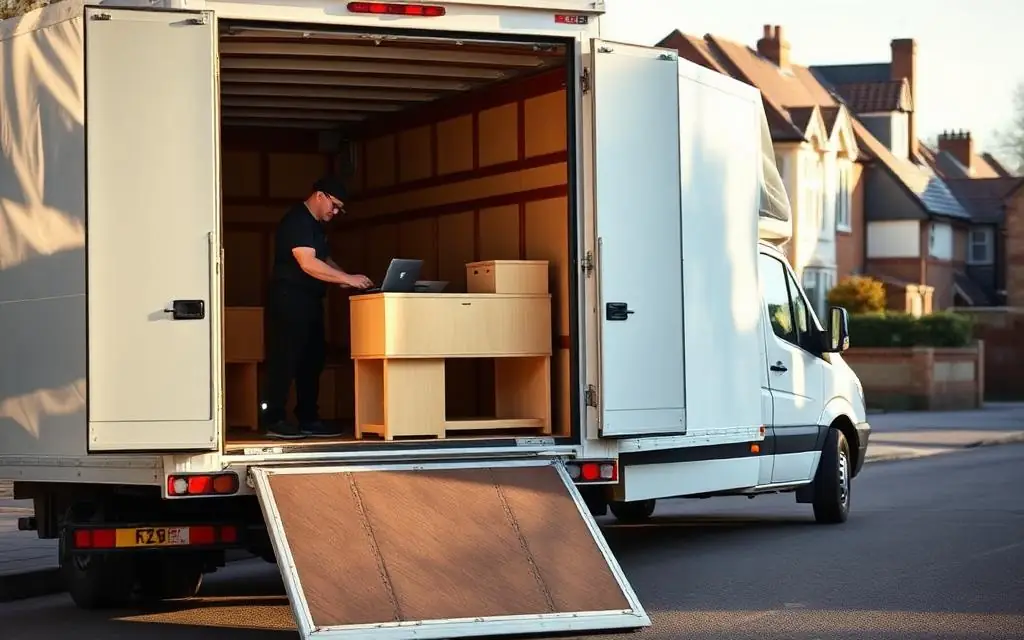
On 4 November 2026, Sandy Movers completed a two-stage construction equipment transport job: a collection near Godalming to Oval, followed by a Hertford collection and delivery to Oval. The work involved fencing, barriers, site equipment and a larger-than-expected second-stage inventory. Careful load planning and flexible handling helped us complete the work on the day.
Key takeaways
- A multi-site move may need separate vehicle loads, even when individual items seem van-sized.
- Heavy fencing bases and fire extinguishers require proper counting and suitability checks.
- The second collection contained more equipment than originally expected, so the handling requirements and scope needed to be reviewed.
- Clear site contacts, separate stages and communication made the changes manageable.
Planning a similar contractor move?
The assignment: equipment from two sites to one London destination
On 4 November 2026, Sandy Movers carried out a contractor transport job involving a site near Godalming in Surrey, a second collection in Hertford, and delivery to Oval in south London. The work was completed in two stages, with the receiving location visited after each collection.
The initial plan involved one main equipment brief, but the second collection contained substantially more items than first anticipated. The final operation required flexibility over labour and transport scope. We have anonymised the contractor and omitted private site addresses, prices, deposit information and customer correspondence.
The move ran from approximately 8:00 am until 3:30 pm. This was the recorded working window for that job, not a standard timing or delivery guarantee for future enquiries.
Stage one: collection of fencing, barriers and site equipment near Godalming
The original first-stage inventory listed around 19 Heras fencing panels, 21 feet or bases and 16 clips. There were also seven Chapter 8-type pedestrian barriers, seven cones, five trolleys, a water tank and a small quantity of site fire extinguishers: five powder units and five water units in the brief.
These are example quantities from the planned inventory, not a claim that every model, shape or weight has been individually verified for publication. The job underlined why the details matter: a long fence panel requires adequate load length and door clearance, while individual fencing bases can be surprisingly heavy in aggregate.
The Godalming equipment was transported to the Oval receiving location as the first stage. Once that load had been dealt with, the team proceeded with the separate Hertford collection.
Stage two: Hertford and a larger-than-expected collection
The second collection was expected to include two MDU units, equipment stands and chairs, alongside roughly 25 fire extinguishers in the earlier brief. The recorded quantity of extinguishers at Hertford was closer to 63 when the collection was handled.
The brief also included approximately eight stands and eight chairs. The exact meaning, contents, weights and dimensions of the two MDU units were not established as a standard product category, so this case study does not guess what they were or how they were classified.
That increase in quantity made the original assumptions about loading and labour less reliable. The site contact was informed, and the additional transport and handling scope was discussed rather than treating the expanded inventory as automatically included.
The Hertford equipment was delivered to Oval in the second stage. This is an example of flexible job coordination, not a promise that unplanned additions can always be accommodated on the same day.
How we dealt with changes to the original plan
The initial arrangement assumed that customer-side staff would provide loading and unloading. The completed work involved a two-person Sandy Movers crew and additional on-site help at part of the route, with extra assistance provided as the circumstances required.
A change from approximately 25 to around 63 extinguishers at a collection is not just an item-count change. It can affect total weight, handling time, safe stowage, route feasibility and the agreement about labour. For future bookings, this is why we ask contractors to report updates before the van reaches a site.
We reviewed the additional work with the contact rather than representing the initial outline as an unlimited service. The contractor received the agreed movements on the day, but the experience does not establish a guaranteed completion window for different loads or sites.
The vehicle fit and weight lesson
The appropriate Sandy Movers Luton has a stated working payload limit of up to approximately 1,000 kg, subject to the actual assigned vehicle, its occupants and fitted equipment, plated axle limits and the load distribution. The load-area dimensions are approximately 4 m in length and 1.8 m in width for initial planning, but the usable space and loading aperture must be checked for the actual vehicle.
A vehicle described as approximately 3 m high may be referring to its outside height; that does not provide 3 m of internal upright cargo clearance. The safe fit of oddly shaped items depends on projecting parts, angle, turning path and restraint, not simply a single maximum dimension.
For context, a reference 25 kg fencing footing means 21 such bases alone would weigh 525 kg. This is illustrative arithmetic using a reference product, not a measured weight of the bases on this job. Combine accessories, furniture and equipment before deciding whether a load is suitable.
Fire extinguishers are pressurised equipment and need appropriate declaration and assessment. This article does not claim every extinguisher, battery or hazardous item is routinely acceptable for carriage.
What this experience means for future contractor bookings
A useful contractor transport request states what must happen at every address: collection, delivery or both; a named release and receiving contact; the actual available time window; and who will load, carry and unload the goods. It also identifies which equipment is still in use, awaiting dismantling, or could be added before collection.
For fencing, count the panels, bases, clips and frames separately. For site furniture and storage boxes, provide gross loaded weight, dimensions and carrying access. For extinguishers or other pressurised or restricted items, give the correct type, quantity and packaging for review before acceptance.
If the original inventory changes, do not assume the same vehicle, price or labour arrangement remains suitable. A second trip, extra hands, revised stop order or alternative transport may be needed. Timely communication is more credible than a blanket promise of instantaneous or guaranteed delivery.
For more information, use the related service links below: construction equipment transport, site-to-site transfers and commercial multi-stop delivery.
What we can and cannot conclude from one completed job
The work demonstrates first-hand experience with a contractor equipment brief that developed during the day and required two distinct stages. It does not establish unlimited payload, an ability to move heavy plant, universal site access certifications, dangerous-goods approval or that every time-sensitive job can follow the same schedule.
We deliberately do not identify the client, provide a testimonial without permission, disclose private prices or suggest this is a photograph of the actual move. For any new transport enquiry, we assess the item dimensions, load weight, access, loading assistance and stated deadline from scratch.
Keep reading
How to Plan a Stress-Free London Move
Read the full guide: How to Plan a Stress-Free London MoveMan and Van vs Full House Removal — Which Do You Need?
Read the full guide: Man and Van vs Full House Removal — Which Do You Need?